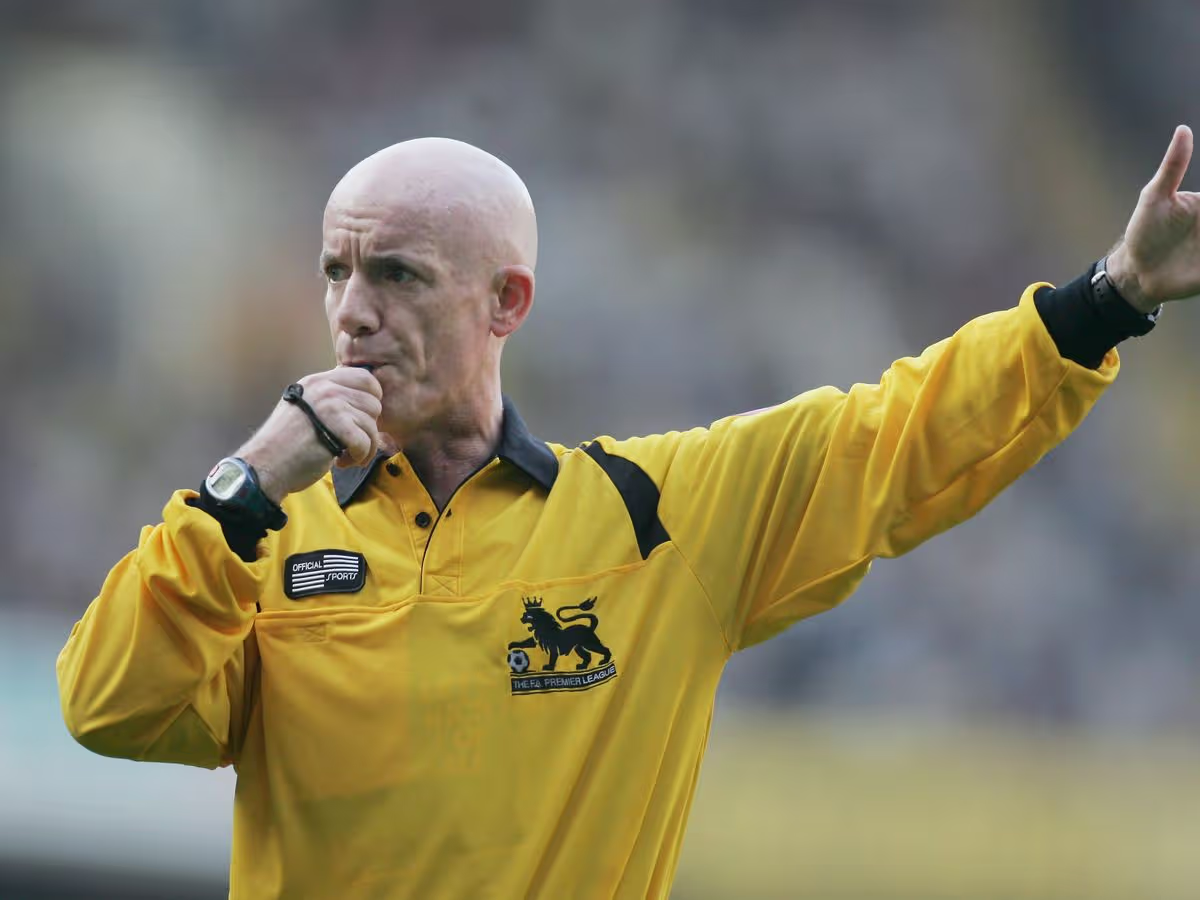
Another dramatic Premier League weekend has placed refereeing and VAR firmly back in the spotlight, with former Premier League referee Dermot Gallagher reviewing some of the most controversial decisions on Sky Sports’ Ref Watch.
The biggest debate came from the Manchester derby, where Manchester City secured a 1-0 victory over Manchester United despite playing much of the game with 10 men. Phil Foden was shown a red card after kicking out at Bruno Fernandes, with VAR supporting the referee’s decision. However, questions were also raised over whether Fernandes himself deserved stronger punishment for his involvement in the incident. Gallagher suggested the Manchester United captain was fortunate to escape without further sanction.
Even greater controversy surrounded Erling Haaland’s winning goal. The striker was initially at the centre of an offside check, but the major issue eventually became the position and actions of Enzo Fernandez. Fernandez was in an offside position and appeared to make an attempt to play the ball before Haaland scored.
VAR decided Fernandez had not interfered sufficiently for the goal to be ruled out, but Gallagher disagreed with that interpretation. The former referee argued that Fernandez’s actions affected the play and that the goal should not have stood.
The controversy intensified when refereeing body Pro Ref later acknowledged that an error had been made and that referee Michael Oliver should have been advised to review the incident on the pitch side monitor. The admission has again raised questions over how VAR officials interpret subjective offside situations and when on field referees should be given the final decision.
There was also plenty of debate surrounding Sunderland’s penalty against Arsenal. Ezri Konsa was penalised following a challenge on Dan Ballard, with VAR choosing not to overturn the referee’s original decision.
Gallagher and fellow Ref Watch pundit Jay Bothroyd examined whether there was enough contact to justify the spot kick and whether Ballard had played a significant role in creating the collision. The incident highlighted another familiar VAR discussion: when a referee makes a subjective call on the field, the threshold for VAR intervention remains high unless there is considered to be a clear and obvious error.
The weekend once again demonstrated how difficult it is to achieve consistency with decisions involving contact, offside interference and serious foul play. Even with multiple camera angles and video technology available, interpretation remains an important part of the process.
Gallagher’s Ref Watch analysis also underlined the growing pressure on officials to explain not only whether a decision was correct, but how they reached it. Supporters increasingly expect transparency from VAR, particularly when a major decision directly affects the result of a match.
The Manchester derby controversy is likely to dominate the discussion because an acknowledged VAR mistake ultimately contributed to the only goal of the game. For Manchester United, that makes the decision particularly difficult to accept, while City were able to leave Old Trafford with all three points despite Foden’s dismissal.
Refereeing debates have always been part of Premier League football, but VAR was introduced partly to reduce major errors. When controversial calls remain even after lengthy video reviews, questions inevitably return about how the technology is being used.
After another weekend packed with disputed decisions, Dermot Gallagher’s latest Ref Watch assessment shows that the conversation around VAR, consistency and referee accountability is unlikely to disappear anytime soon.