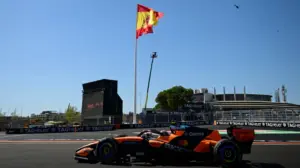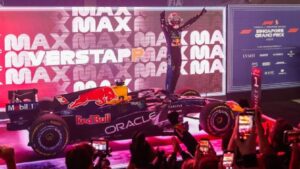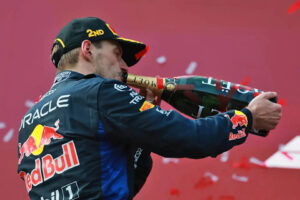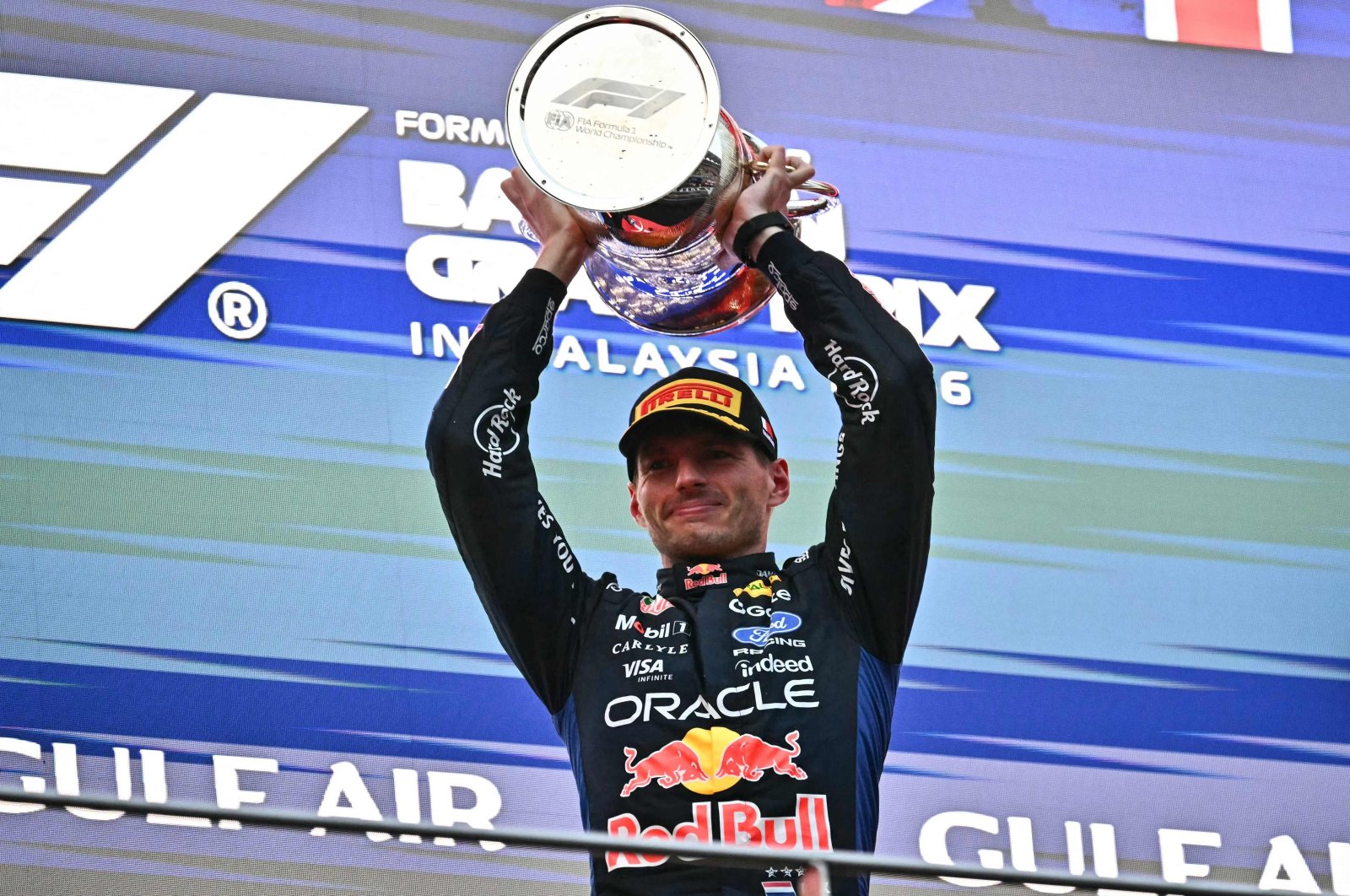
Max Verstappen finally ended his wait for a Formula 1 victory in 2026 with a superb win in a chaotic, rain-affected Bahrain Grand Prix in Malaysia, while Lewis Hamilton produced one of the recovery drives of the season to climb from 18th to third.
Formula 1’s return to the Sepang International Circuit produced extraordinary drama as heavy rain delayed the start by more than 90 minutes, split the field between tyre strategies and triggered multiple Safety Car periods.
Verstappen eventually crossed the line 2.307 seconds ahead of championship leader Kimi Antonelli, with Hamilton completing the podium for Ferrari after his early tyre gamble initially appeared to have destroyed his race.
The victory was Verstappen’s first of the 2026 season, Red Bull’s first win with its own power unit and the four time world champion’s 72nd Formula 1 triumph.
It was also fittingly achieved at the same circuit where Verstappen had won Formula 1’s previous race at Sepang in 2017.
Rain transforms the race
The Bahrain Grand Prix was being held at Sepang after the event was relocated to Malaysia because of conflict in the Middle East.
Teams had prepared for a demanding dry race featuring significant tyre degradation, but those plans were completely rewritten when a major thunderstorm swept across the circuit shortly before the scheduled start.
Heavy standing water made conditions too dangerous, forcing Race Control to delay proceedings.
The initial start procedure was later suspended after several drivers struggled during the formation lap, leaving teams facing one of the most difficult tyre decisions of the season.
When racing eventually began, the grid was split between intermediate and slick tyres.
Verstappen, Antonelli and George Russell selected intermediates.
Ferrari took the more aggressive approach with Hamilton and Charles Leclerc on slicks.
Initially, the intermediates were clearly superior.
Antonelli grabs the lead as Verstappen drops back
Verstappen had started from pole after dominating Saturday qualifying, but his advantage disappeared almost immediately.
Antonelli made an excellent getaway from third and surged through the middle to take the lead before Turn 1.
Russell produced an equally impressive launch from seventh, sweeping around the outside and moving into second.
Verstappen suddenly found himself third despite starting at the front.
But the Dutchman remained patient.
On lap six he attacked Russell and moved past the Mercedes at Turn 4, allowing him to begin chasing Antonelli.
The first major Safety Car then changed the race again.
Valtteri Bottas spun his Cadillac into the gravel on lap 10, giving the drivers who had started on intermediates the perfect opportunity to switch to slick tyres.
Verstappen immediately took advantage.
After the restart he stayed close behind Antonelli before passing the Mercedes at Turn 3 to reclaim the lead.
Russell also overtook his team mate shortly afterwards, temporarily pushing Antonelli back to third.
Verstappen takes control
Once in clean air, Verstappen quickly demonstrated Red Bull’s pace.
He began setting fastest laps and steadily increased his advantage over Russell.
Antonelli believed he had more speed than his team-mate and eventually passed Russell on lap 21 to move back into second place.
However, Verstappen was already beginning to escape.
Antonelli then made an error at Turn 15, missing his braking point and briefly leaving the circuit, which allowed Verstappen’s advantage to grow further.
By the closing stages, Verstappen had built a lead of more than 10 seconds and appeared set for a comfortable victory.
Another Safety Car eliminated that advantage and created one final sprint to the finish, but Verstappen remained composed.
He controlled the restart and held Antonelli behind to finally secure Red Bull’s first win of the year.
For Verstappen, the result represented a major reward after a season in which Red Bull had often struggled to match Mercedes.
Recent upgrades had hinted that the RB22 was becoming more competitive, and the Sepang weekend provided the clearest confirmation yet.
Verstappen took both pole position and victory, completing Red Bull’s strongest weekend of 2026.
Hamilton’s gamble turns into disaster
While Verstappen was fighting near the front, Hamilton experienced the opposite start.
The seven-time world champion had qualified second and appeared well positioned to challenge Verstappen before the rain arrived.
Ferrari decided to start Hamilton on slick tyres despite the circuit still being extremely wet.
It immediately became clear that the gamble had backfired.
Hamilton struggled for grip as cars on intermediates streamed past him, eventually dropping as low as 18th place.
Hamilton later admitted he realised the scale of Ferrari’s problem before the race had even properly begun when he saw Verstappen and Antonelli preparing intermediate tyres.
Ferrari considered bringing him back into the pits, but Hamilton decided to stay committed to the strategy rather than lose even more time.
That decision ultimately proved important.
Hamilton begins extraordinary recovery
As the circuit dried, Hamilton’s slick tyres finally began working.
The Ferrari suddenly became one of the quickest cars on track, and Hamilton started cutting through the field.
The first Safety Car also helped erase much of the enormous deficit he had accumulated during the opening stages.
From there, Hamilton steadily climbed into contention.
By the middle of the race he had reached fifth place and was closing on Red Bull’s Isack Hadjar.
Another dramatic development then opened the door to a podium.
Russell, who had been running third, suffered a suspected power unit failure with only five laps remaining.
The Mercedes stopped on the main straight during the late Safety Car period, ending Russell’s race and promoting Hamilton into the battle for the final podium position.
When racing resumed for the final laps, Hamilton attacked.
He finally passed Hadjar to take third place and then resisted any late threat to complete an exceptional recovery.
From 18th to third, Hamilton had transformed what initially appeared to be one of Ferrari’s worst strategic errors of the season into a podium finish.
Leclerc joins Ferrari comeback
Hamilton was not the only Ferrari driver forced into recovery mode.
Leclerc had also started on slick tyres and dropped towards the rear during the opening stages.
Like Hamilton, he benefited as the track dried and gradually made his way back through the field.
Leclerc overtook Hadjar with two laps remaining to claim fourth place, completing a remarkable Ferrari recovery after both cars had looked effectively out of contention early in the race.
Hadjar eventually finished fifth, ahead of Oscar Piastri in sixth.
Liam Lawson took seventh for Racing Bulls, while Fernando Alonso delivered Aston Martin’s best result of the season with eighth.
Lando Norris finished ninth after running through the gravel behind the Safety Car, while Arvid Lindblad claimed the final point in 10th.
Russell retirement damages championship hopes
The biggest loser from the late drama was Russell.
The Mercedes driver was on course for another valuable podium and potentially only a small championship loss to Antonelli before his car suddenly failed.
Instead, Russell scored nothing.
Antonelli’s second place allowed the Italian to extend his championship advantage over his team mate to 84 points with seven rounds remaining.
The retirement therefore represented a major blow to Russell’s hopes of turning the Mercedes battle into a genuine fight for the title.
Antonelli, meanwhile, strengthened his position despite being unable to challenge Verstappen for victory.
The championship leader admitted Mercedes had not possessed the pace to beat Red Bull but considered second place the maximum available result.
First wet weather test of 2026
The race was also significant because it represented the first genuinely wet Grand Prix of Formula 1’s new 2026 technical era.
The season had reached its 16th round without a wet race, meaning teams had limited real world knowledge of how the new generation cars and power units would behave in extreme conditions.
That lack of experience contributed to an unusually chaotic afternoon.
The FIA has since said it will investigate a software issue that affected several cars during the formation lap period, with wet conditions exposing problems that had not emerged during pre season testing.
Sepang therefore provided more than just an entertaining race.
It also exposed areas that Formula 1 and the teams will need to understand better before the next major wet weather event.
Verstappen finally back on top
For Verstappen, however, the afternoon was ultimately about returning to winning ways.
Red Bull had endured an unusually difficult season by its recent standards, and Verstappen arrived in Malaysia without a victory through the opening 15 rounds.
That changed emphatically at Sepang.
After losing the lead at the start, Verstappen fought his way back to the front, handled changing conditions and remained calm through multiple restarts.
His victory showed that Red Bull’s recent progress is beginning to produce genuine results.
Hamilton’s recovery was almost as impressive.
Ferrari’s early gamble dropped him near the very back of the grid, but experience, pace, Safety Car timing and a series of aggressive overtakes eventually delivered an unlikely podium.
On Formula 1’s wild return to Sepang, Max Verstappen finally became a Grand Prix winner again while Lewis Hamilton turned a disastrous opening gamble into one of the most memorable comeback drives of the 2026 season.