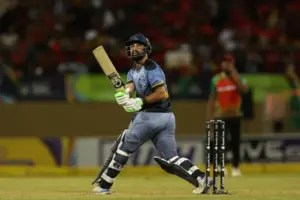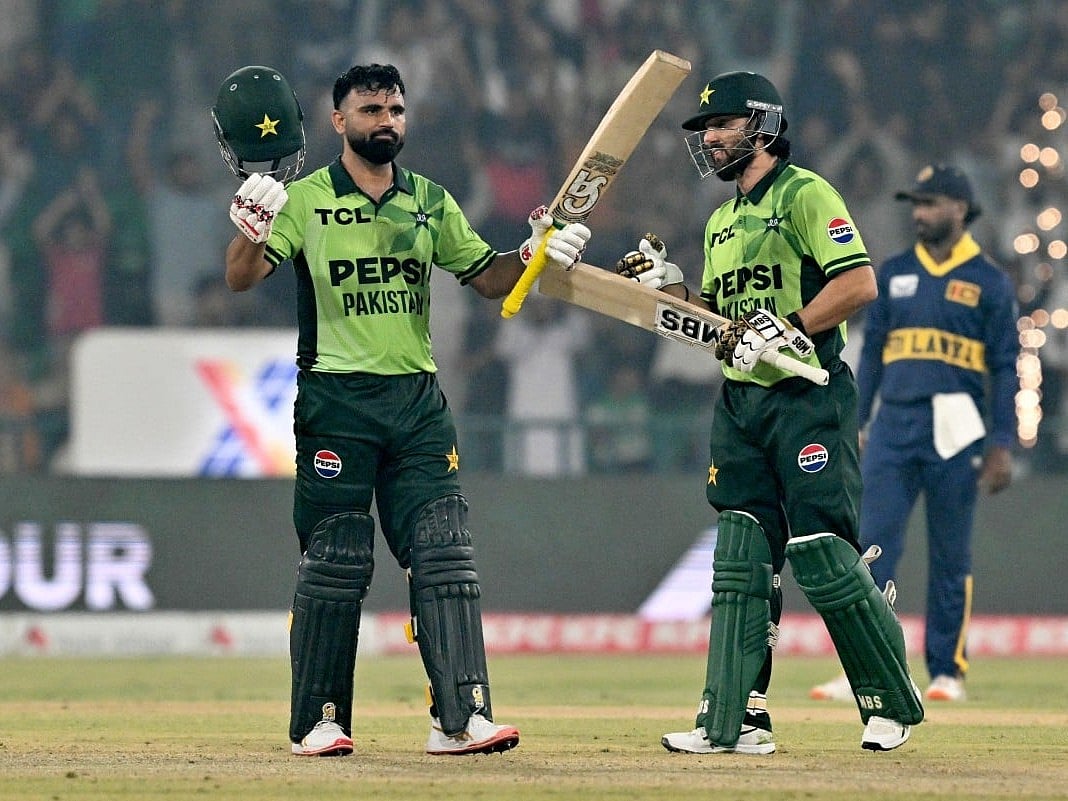
Fakhar Zaman produced a superb century under pressure as Pakistan chased down 326 to defeat Sri Lanka by three wickets in Lahore and lift the ODI tri-series title, overshadowing a brilliant maiden hundred from Kamindu Mendis.
Pakistan reached 331-7 in 48.3 overs at the Gaddafi Stadium, completing one of the highest successful chases ever recorded in an ODI final and ending an 18 year wait for another tri-series title. Fakhar led the way with 127 from 99 deliveries, while Arafat Minhas added a crucial late 61 from just 31 balls.
Sri Lanka had earlier posted an imposing 325-8 after being sent in to bat, with Kamindu Mendis compiling 131 from 128 balls and Pavan Rathnayake continuing his outstanding tournament with 77 from 65 deliveries.
The Sri Lankan innings began strongly as Avishka Fernando and Kamindu put on 87 for the opening wicket.
Fernando contributed 38 before departing, but Kamindu continued to anchor the innings with composure and control.
Rathnayake then joined him and immediately increased the tempo.
The pair added 146 runs, putting Sri Lanka in an excellent position to push beyond 340 and potentially take the final away from Pakistan.
Rathnayake’s 77 capped an exceptional tri-series in which he accumulated 427 runs at an average above 100, including two centuries against England.
His ability to combine clean stroke play with rapid scoring again proved central to Sri Lanka’s batting plan.
Kamindu, meanwhile, reached his maiden ODI century and went on to 131, producing the most important innings of his 50 over career to date.
Pakistan fought back strongly during the closing overs.
Shaheen Shah Afridi dismissed both Kamindu and Dasun Shanaka with full deliveries, while Haris Rauf also struck twice late in the innings.
Sri Lanka lost six wickets across the final nine overs, preventing them from turning a strong 255 after 41 overs into an even bigger total.
That late recovery proved crucial for Pakistan.
A target of 326 remained challenging, but on a good batting surface under lights it was still within reach.
The chase, however, began badly.
Maaz Sadaqat fell for five and Babar Azam was dismissed for a five-ball duck, reducing Pakistan to 14-2 and giving Sri Lanka early control.
Fakhar then completely changed the mood of the contest.
He joined 19 year old Saad Baig and began attacking Sri Lanka’s bowlers with the aggressive stroke play that has defined many of his best international innings.
The pair put together 149 runs, repairing the innings while ensuring the required rate never became overwhelming.
Baig played one of the finest innings of his young international career.
He scored 74 from 75 balls and reached his maiden ODI half-century, giving Pakistan stability after the early wickets.
Fakhar was far more aggressive.
He reached three figures in just 84 deliveries and eventually struck 11 fours and six sixes in his 127.
Sri Lanka were left to regret several missed opportunities.
Fakhar was dropped multiple times during his innings, including chances when he was on 69 and again after passing his hundred.
Those errors allowed one of Pakistan’s most dangerous white-ball batters to continue dominating the chase.
Dilshan Madushanka eventually removed Fakhar in the 34th over, bowling him with Pakistan still needing 106 runs.
That dismissal briefly reopened the contest.
Sri Lanka then picked up further wickets, and at 230-5 after 36.5 overs the final was once again finely balanced.
Pakistan’s younger middle order responded impressively.
Arafat Minhas played the decisive late innings, scoring 61 from only 31 balls.
His counterattack included three fours and four sixes and prevented Sri Lanka from completely regaining control.
Hasan Nawaz also played an important supporting role with an unbeaten 37 from 45 deliveries.
The pair absorbed pressure before accelerating dramatically during the final stages.
With 46 runs required from the last five overs, Minhas targeted Dasun Shanaka in a 15 run over that shifted the momentum firmly back towards Pakistan.
There was still one final twist.
Asitha Fernando dismissed Minhas and Faheem Ashraf with successive deliveries, briefly giving Sri Lanka hope of another late comeback.
But Hasan Nawaz remained calm, while Pakistan captain Shaheen Afridi delivered the perfect finish by striking a six to complete the chase.
Pakistan’s 331-7 with nine balls remaining secured a three-wicket victory and completed a highly successful home tri series campaign.
The chase also equalled the highest successful run chase in the history of an ODI final.
For Fakhar, the innings represented a particularly timely return to form.
He had scored only 31 runs across his previous four innings and had also suffered a bruised right knee while fielding earlier in the final.
Despite spending much of Sri Lanka’s innings receiving treatment, he returned to play the defining knock of the match.
It was his 12th ODI century and another reminder of his ability to produce major performances in high pressure matches.
Fakhar’s career has already included memorable tournament knocks, most notably his century in the 2017 Champions Trophy final against India.
Nine years later, he again delivered on a big final night for Pakistan.
Sri Lanka were left disappointed despite producing one of their strongest batting performances of the tournament.
Kamindu’s 131 deserved to be a match winning innings, while Rathnayake continued a spectacular individual campaign.
However, the inability to finish the first innings more strongly and the dropped catches during Pakistan’s chase ultimately proved costly.
The wet ball caused by heavy dew also made defending increasingly difficult.
Pakistan’s batters were able to attack more freely during the later overs, while Sri Lanka’s bowlers struggled to maintain the same control they had shown earlier in the innings.
Madushanka was the pick of the Sri Lankan attack with 3-63, while Asitha Fernando took 2-72.
Those wickets kept Sri Lanka alive deep into the contest, but the total was eventually not enough.
For Pakistan, the title provides encouragement ahead of the 2027 ICC Men’s Cricket World Cup.
Their batting depth was tested throughout the final, yet different players responded when required.
Fakhar provided the foundation, Baig showed maturity beyond his years, Minhas supplied the late acceleration and Hasan Nawaz ensured the chase remained under control.
The tournament also offered valuable experience to several younger Pakistan players.
Saad Baig and Minhas both produced important performances in the final, giving the hosts another reason to view the series positively beyond the trophy itself.
Sri Lanka can also take important lessons from the competition.
Rathnayake emerged as one of the standout batters of the entire tri-series, while Kamindu’s maiden ODI hundred demonstrated the depth available in the top order.
Their remarkable successful chase of 430 against England earlier in the tournament also showed just how dangerous Sri Lanka can be when their batting unit performs collectively.
But in the final, Pakistan were simply better in the decisive moments.
Kamindu Mendis gave Sri Lanka a commanding platform with 131, but Fakhar Zaman answered with a magnificent 127 before Pakistan’s young middle order completed the job. The result gave the hosts a three wicket victory, the tri series trophy and a memorable Lahore finish to a tournament packed with extraordinary batting performances.